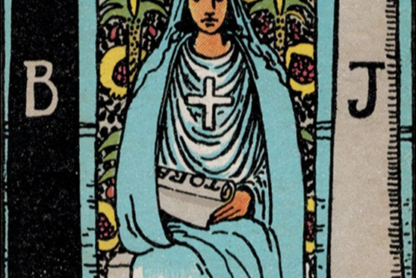


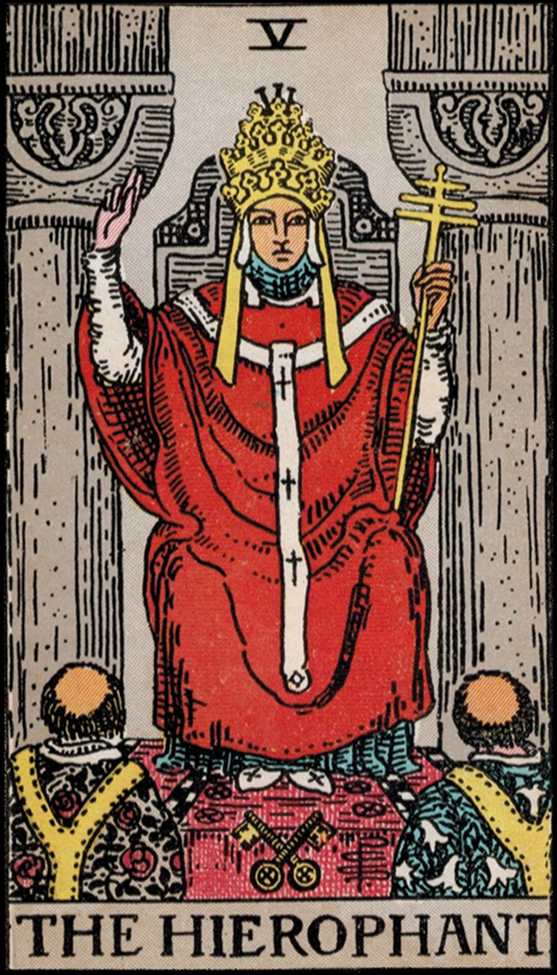
The Hierophant is one of the major arcana cards in the Tarot deck, usually numbered as card number five (V) in the traditional Tarot sequence. It is a card of tradition, spirituality, and religious authority. The Hierophant represents a wise and learned figure who serves as a bridge between the divine and the earthly realm. Here are some facts and descriptions about The Hierophant tarot card:
1. Religious Symbolism: The Hierophant is often depicted as a religious or spiritual leader, such as a priest, pope, or spiritual teacher. The card represents organized religion, formal rituals, and established belief systems.
2. Wisdom and Guidance: This card embodies wisdom, knowledge, and guidance. The Hierophant serves as a mentor and teacher, offering valuable insights and spiritual direction to those seeking higher truths.
3. Tradition and Rituals: The Hierophant card emphasizes the importance of tradition, customs, and rituals. It represents adherence to established norms, and the wisdom passed down through generations.
4. Spiritual Authority: As a symbol of spiritual authority, The Hierophant represents someone with a deep connection to the divine, acting as an intermediary between individuals and the sacred.
5. Marriage and Union: In some interpretations, The Hierophant card symbolizes marriage and union. It can signify the need for commitment and a deeper connection with one’s partner or a formalized union within a spiritual context.
6. Dogma and Conformity: On the negative side, The Hierophant can represent dogma, conformity, or rigid adherence to traditional beliefs that may stifle individuality and personal growth.
7. Seeker of Truth: The Hierophant encourages seekers to explore deeper spiritual truths and find meaning in their lives. It symbolizes a quest for higher knowledge and understanding.
8. Formal Education and Institutions: The Hierophant can represent formal education, universities, and institutions that provide structured learning and spiritual teachings.
9. Duality and Balance: The Hierophant card often depicts two followers or acolytes. This duality represents the balance between external religious structures and inner spiritual experiences.
10. Tarot Number Five: In the Tarot sequence, The Hierophant follows The Emperor (card IV). While The Emperor represents worldly power and authority, The Hierophant focuses on spiritual authority and the connection to divine wisdom.
The Hierophant is a card of spiritual guidance, tradition, and wisdom. It reminds us to seek deeper meanings in life, embrace spiritual teachings, and connect with higher truths. The card can also serve as a reminder to find a balance between adhering to tradition and exploring personal spiritual experiences. When The Hierophant appears in a Tarot reading, it suggests a time of seeking spiritual understanding, connecting with a mentor or teacher, or reflecting on established belief systems and their relevance in one’s life.
The Hierophant in Reverse
When The Hierophant tarot card appears in reverse in a reading, its traditional meanings and symbolism are reversed, suggesting a disruption or imbalance in the qualities associated with this card. Here’s a description of The Hierophant card in reverse:
The Hierophant Reversed Tarot Card
In its reversed position, The Hierophant indicates a rebellion against tradition, rigid belief systems, or established authority. It may suggest a rejection of organized religion or a desire to break free from conforming to societal norms. The reversed Hierophant card represents a call for personal autonomy and individuality, seeking alternative paths to spiritual growth and understanding.
- Rebellion Against Tradition: The Hierophant reversed signifies a rebellion against established traditions, religious dogma, or rigid structures. It may suggest that the seeker is questioning or rejecting the authority of traditional institutions and seeking their unique spiritual path.
- Challenging Authority: This card in reverse may indicate a refusal to submit to external authority figures or religious leaders. The seeker might question the motives or teachings of those in positions of power and seek a more authentic and personal connection with spirituality.
- Breaking Free from Conformity: The reversed Hierophant can represent a desire to break free from societal expectations and cultural norms. The seeker may seek to express their individuality and spiritual beliefs outside mainstream conventions.
- Spiritual Unorthodoxy: In its reversed position, The Hierophant suggests an exploration of unconventional or unorthodox spiritual practices. The seeker may be drawn to alternative belief systems or esoteric teachings that challenge traditional norms.
- Rejection of Formal Education: The Hierophant reversed may indicate a resistance to formal education or institutions that do not resonate with the seeker’s beliefs and values. It suggests a preference for experiential learning and direct spiritual experiences.
- Spiritual Identity Crisis: The reversed Hierophant can represent a period of spiritual questioning and uncertainty. The seeker may be experiencing a crisis of faith or seeking to redefine their spiritual identity.
- Open-Mindedness: On a positive note, The Hierophant reversed encourages the seeker to approach spirituality with an open mind and heart. It urges them to embrace diverse perspectives and explore a wide range of spiritual philosophies.
- Reconnecting with Inner Wisdom: This card in reverse may signal a need for the seeker to reconnect with their inner wisdom and intuition. It advises them to trust their instincts rather than relying solely on external authorities for guidance.
- Embracing Individual Spiritual Journey: The Hierophant reversed invites the seeker to embrace their spiritual journey and explore their unique path to enlightenment and understanding.
When The Hierophant appears in reverse, it serves as a reminder to question established beliefs and seek authentic spiritual experiences. It encourages the seeker to embrace their personal growth and autonomy in spirituality and to be open to exploring alternative perspectives outside of traditional structures. The reversed Hierophant represents a call to break free from conformity and to trust in one’s inner guidance on the quest for spiritual truth.
The Hierophant Yes or No
In Yes or No Tarot readings, The Hierophant card can be a bit nuanced and may not provide a straightforward “Yes” or “No” answer like some other cards in the deck. The Hierophant is a card of tradition, authority, and spirituality, which means its response might be more complex. However, it can still offer valuable insights in a Yes or No context. Here’s a description of The Hierophant card in Yes or No readings:
The Hierophant Card in Yes or No Readings:
When The Hierophant card appears in a Yes or No Tarot reading, it indicates a neutral or uncertain answer. This card is not particularly oriented toward simple, direct responses but emphasizes the importance of adhering to one’s values, seeking spiritual guidance, and respecting tradition.
Neutral/Maybe: The Hierophant card suggests that the answer may not be immediately clear-cut and advises the seeker to consider the deeper aspects of the situation. It may indicate that external guidance or seeking wisdom from a mentor or spiritual leader might be beneficial.
Trust Your Values: The Hierophant encourages the seeker to trust their values and beliefs when making a decision. It may indicate that sticking to one’s principles and seeking spiritual guidance can be essential in finding the right path forward.
Spiritual Quest: This card represents a quest for spiritual knowledge and understanding. In a Yes or No reading, it might suggest that the seeker’s focus should be on their spiritual growth and connection with higher truths rather than seeking a simple answer.
Consider External Factors: The Hierophant advises the seeker to consider external factors, such as advice from trusted authorities or the wisdom of established traditions. It might indicate that seeking counsel from knowledgeable sources can provide valuable insights.
Openness to New Perspectives: On the positive side, The Hierophant encourages the seeker to be open to exploring new perspectives and alternative belief systems. It suggests that embracing diverse viewpoints might lead to a more profound understanding of the situation.
Embrace Your Individual Path: The Hierophant also reminds the seeker to embrace their spiritual path and values. It may indicate that the answer lies in honoring one’s unique journey rather than conforming to external expectations.
Trust Your Intuition: While The Hierophant emphasizes seeking guidance, it also encourages the seeker to trust their intuition and inner wisdom. It suggests that both external and internal insights should be considered when seeking answers.
Overall, The Hierophant card in a Yes or No reading emphasizes the importance of spiritual guidance and values in decision-making. It encourages the seeker to explore deeper meanings, trust their instincts, and consider external advice and personal beliefs. The answer to the question may take time, but it offers valuable insights for the seeker’s spiritual growth and understanding.
| Upright | Education, Religion, Tradition |
|---|---|
| Reversed | Abuse of power, Rejection of family values |
| General Yes/No | Neutral |
| Element | Earth |
| Astrological Sign | Taurus |
| Planet | Venus |
| Numerology | 5 |