

The Emperor
The Emperor is one of the major arcana cards in the Tarot deck, typically numbered as card number four (IV) in the traditional Tarot sequence. This card represents authority, leadership, structure, and stability. The Emperor embodies the masculine archetype and stands as a symbol of order and control. Here are facts and a description of The Emperor tarot card:
Description of The Emperor Tarot Card:
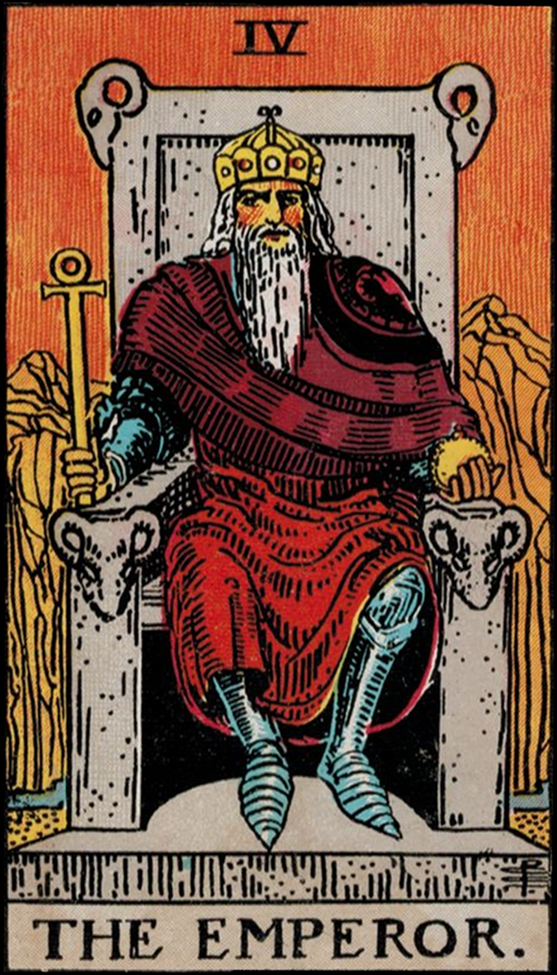
- Regal Figure: The Emperor is often depicted as a mature and authoritative figure sitting on a throne, signifying his position of power and leadership.
- Armor and Scepter: The Emperor wears armor, symbolizing his strength and protection. He holds a scepter, representing his authority and rule.
- Rams or Aries Symbolism: The Emperor is associated with the zodiac sign Aries, represented by the ram. This connects the card to traits such as assertiveness, ambition, and courage.
- Mountains and Stone: The Emperor’s throne is often placed on a landscape with mountains or rocks, representing his stability and ability to overcome challenges.
- Red Robes: The Emperor’s robe is often red, signifying passion, power, and vitality.
- Beard and Crown: The Emperor may have a beard, symbolizing wisdom and experience. He might also wear a crown, further emphasizing his sovereignty and authority.
- Number Four: In the Tarot sequence, The Emperor is the fourth card, signifying a sense of stability, structure, and the establishment of foundations.
- Father Figure: The Emperor card can represent a fatherly figure, mentor, or someone in a position of authority in the querent’s life.
Facts about The Emperor Tarot Card:
- The Emperor is the counterpart to The Empress in the Tarot deck, embodying the masculine counterpart to her feminine energy. Together, they represent a balance between male and female principles.
- The Emperor is often associated with the element of Fire, signifying action, ambition, and initiative.
- This card is linked to the Hebrew letter “He,” representing the window or opening, symbolizing the gateway to higher understanding and consciousness.
- The Emperor card may represent a strong-willed and disciplined individual who possesses leadership qualities and knows how to take charge of situations.
- The Emperor’s energy is often associated with structure, organization, and the establishment of order, making it a card of stability and control.
- In a Tarot reading, The Emperor can symbolize the need for authority, self-discipline, and practical decision-making. It suggests the importance of taking a responsible and rational approach to achieving one’s goals.
- This card can represent the need to embrace one’s own power and assertiveness while staying grounded and fair in handling situations.
Overall, The Emperor tarot card embodies leadership, authority, and stability qualities. It serves as a reminder of the importance of structure and discipline in achieving one’s objectives and embracing one’s power with responsibility and wisdom.
The Emperor in Reverse
When The Emperor card appears in reverse in a Tarot reading, its upright meanings are reversed or blocked, leading to a different interpretation. Here is a description of The Emperor card in reverse:
The Reversed Emperor Tarot Card
In its reversed position, The Emperor card takes on a more challenging and negative aspect, suggesting a disruption or imbalance of its authoritative and structured energies.
- Authoritarianism and Domination: The reversed Emperor may indicate a misuse of power or authority, resulting in a domineering or dictatorial behavior. This can lead to oppressive situations or feelings of being controlled by others.
- Lack of Leadership or Direction: In reverse, The Emperor can represent a lack of leadership or a sense of directionlessness. It may suggest confusion or uncertainty in making decisions and taking charge of situations.
- Weakness or Insecurity: The reversed Emperor might signify a lack of confidence or inner strength. The individual may struggle to assert themselves or exhibit the qualities of true leadership.
- Rebellion or Resistance: When The Emperor appears in reverse, it could indicate resistance to authority or a tendency to rebel against rules and structures, resulting in chaos or conflict.
- Disorganization and Lack of Control: The reversed Emperor may suggest a lack of organization and an inability to maintain order and control in one’s life or surroundings.
- Abuse of Power: In some cases, the reversed Emperor may represent an abuse of power, where someone is using their influence to manipulate or exploit others for personal gain.
- Insecurity and Impostor Syndrome: The reversed Emperor can also indicate feelings of inadequacy or a sense of being an impostor in a leadership role, lacking the confidence to make decisions.
- Rigidity or Stubbornness: The reversed Emperor might represent an overly rigid or stubborn approach to situations, refusing to adapt or consider alternative perspectives.
- Father Figure Issues: In some readings, The Emperor in reverse could suggest unresolved issues with father figures or difficulties in finding healthy role models.
- Disconnection from Masculine Energy: The reversed Emperor might signify a disconnection from positive masculine energy, resulting in an inability to embrace assertiveness and responsibility.
Important Note: Reversed Tarot cards do not always represent entirely negative outcomes but rather suggest that the energies of the card are being expressed differently or are not fully realized. The reversed Emperor serves as a reminder to address any imbalances or issues related to authority, control, and responsibility, seeking to find healthy ways to embrace leadership qualities.
The Emperor Yes or No
In Yes or No Tarot readings, The Emperor card holds significant authority and can provide valuable insights into the answer. However, it’s important to remember that Tarot readings are not solely about simple yes or no answers, as they are based on symbolism, intuition, and interpretation. Here’s a description of The Emperor tarot card in Yes or No readings:
The Emperor Card in Yes or No Readings:
When The Emperor card appears in a Yes or No Tarot reading, it generally leans towards a “Yes” response. The Emperor embodies leadership, structure, and control qualities, suggesting a positive and assertive outcome. This card signifies a robust and disciplined approach and the ability to take charge of the situation.
Yes: The Emperor card in a Yes or No reading often indicates a positive and affirming answer. It suggests that the querent has the power and authority to achieve their goals through strategic planning, organization, and responsible decision-making. The Emperor card encourages the querent to take charge of their life and embrace a sense of control and authority.
No: In rare cases, The Emperor card might suggest a “No” response. This could happen if the querent’s approach needs to be more flexible or dictatorial, leading to resistance or blockage in achieving their desires. It also indicates a lack of direction or leadership in the situation, hindering progress.
Neutral/Maybe: The Emperor card can sometimes indicate a neutral or “Maybe” response. This suggests that the querent’s potential for success or accomplishment depends on their ability to embrace assertiveness, discipline, and structure. The card encourages the querent to take the reins and confidently make decisions to achieve their objectives.
Important Note: Tarot readings are not definitive answers, and the future is always subject to change based on our choices. The Yes or No interpretation of The Emperor card is a general guideline. It should be considered alongside other cards, the spread’s context, and the reader’s intuition to comprehensively understand the situation at hand. Tarot readings are best used as tools for self-reflection, guidance, and empowerment rather than absolute predictors of the future.
| Upright | Power, Leadership, Framework, Authority Figure |
|---|---|
| Reversed | Dictatorial, Inflexiablity |
| General Yes/No | Yes |
| Element | Fire |
| Astrological Sign | Aries |
| Planet | Mars |
| Numerology | 4 |